


When shopping for jeans, trousers, skirts, or other clothing, one of the first questions that can pop into your head is, what size is a 29 waist? A 29-inch waist sounds wonderfully precise, but clothing sizes have a slightly mischievous habit of changing from one brand to another. A size 29 in one pair of jeans may feel different from another labeled the same way.
In simple terms, a 29 waist means the garment is designed around a 29-inch waist measurement. In many cases, this is written directly as size 29, especially for jeans and pants. But when you move into general US clothing size systems, the answer can become less exact because women’s clothing and men’s clothing use different sizing conventions.
So, is a 29-inch waist small, medium, large, or something else? Usually, it falls somewhere around a small-to-medium range depending on the clothing category, brand, and whether you’re shopping for men or women. The most reliable way to find the right answer is to compare your actual body measurements with the manufacturer’s chart.
What Size Is a 29 Waist?

A 29 waist generally means a 29-inch waist circumference, measured around the natural waist. For pants and jeans, a label such as W29 commonly indicates that the waistband is intended for someone with approximately a 29-inch waist.
For men, a 29-inch waist is often sold simply as a size 29 in men’s pants sizing. Some brands may classify it around XS or S when using letter-based sizing, but there isn’t one universal conversion.
For women, a 29-inch waist can correspond to different numbered sizes depending on the brand. It may commonly fall somewhere around US 6–10, but that range is only a rough guide, not a promise carved into stone. Women’s clothing has especially noticeable variation between brands.
The important thing is that a 29 inch waist clothing size describes a measurement more than it describes a universal letter or number size.
29 Inch Waist Size for Men
In men’s clothing, a 29-inch waist is generally straightforward because men’s jeans and pants are frequently sold according to waist and inseam measurements.
A pair marked 29×30, for example, usually means approximately a 29-inch waist and a 30-inch inseam. This makes shopping easier, though actual garment measurements can still vary a little.
A 29 waist in men’s clothing is commonly considered a smaller men’s waist size. Depending on the company’s brand sizing, it may be classified as XS or S when converted into general letter sizing.
| Waist Measurement | Common Men’s Pants Label | General Letter Size |
|---|---|---|
| 28 inches | 28 | XS |
| 29 inches | 29 | XS–S |
| 30 inches | 30 | S |
| 32 inches | 32 | S–M |
| 34 inches | 34 | M |
These are general comparisons, not a universal pants size chart. A manufacturer can use its own measurements, so checking the specific chart before buying is still the smarter move.
29 Inch Waist Size for Women
The question becomes a little more complicated when asking about 29 waist in women’s clothing. Women’s sizing doesn’t consistently use waist measurements as the main label, and a 29-inch waist could correspond to several numbered sizes.
A 29-inch waist may often fall around a US 6, 8, or 10 depending on the brand, garment style, and other measurements such as hips. That’s why simply searching for 29 waist women’s size can give several different answers.
For example, a woman with a 29-inch waist could need a different size in jeans than in a fitted dress. Stretch denim can also fit quite differently from rigid denim, because apparently even fabric has opinions.
A general reference might look like this:
| Women’s Waist | Approximate US Size Range |
|---|---|
| 25–26 inches | 0–2 |
| 27–28 inches | 4–6 |
| 29 inches | 6–10 |
| 30–31 inches | 8–12 |
| 32–34 inches | 10–16 |
This is only a broad women’s waist size chart, not a guaranteed conversion. Hip measurement is especially important for women’s jeans and pants.
29 Waist Equals What Size in Jeans?
If you’re wondering 29 waist equals what size in jeans, the easiest answer is usually: size 29 jeans.
Jeans often use waist-based labeling, so a tag marked W29 is intended to represent approximately a 29-inch waist. You may see labels such as 29×30 or 29×32, where the first number refers to waist and the second to inseam.
However, the actual waistband of a size 29 pair isn’t necessarily exactly 29 inches when laid flat and measured. Designers account for fit, rise, stretch, and construction.
That’s why a 29 waist jeans size can feel snug in one style and relaxed in another. High-rise, mid-rise, and low-rise jeans don’t sit at the same place on the body either.
29 Inch Waist Pants: What Should You Look For?
A 29 inch waist pants size is usually labeled W29 when the manufacturer uses waist measurements. For people shopping online, this can be more useful than relying on S, M, or L.
If you’re looking at pants without numerical sizing, compare the garment’s apparel size chart with your measurements. Some companies provide measurements for the actual garment, while others provide recommended body measurements.
The difference matters. A garment measurement tells you about the clothing itself, while a body measurement tells you which person the manufacturer expects that garment to fit.
For the best clothing fit, look at waist, hips, rise, and inseam together rather than focusing only on the waist.
How to Measure a 29-Inch Waist

Knowing how to measure waist correctly can prevent a surprising amount of online-shopping frustration.
Stand naturally and avoid pulling your stomach in. Wrap a flexible measuring tape around your natural waist, keeping the tape level and comfortably snug.
Don’t tighten the tape until it digs into your skin. At the same time, don’t leave a large gap between your body and the tape. Take the measurement in inches and write it down.
Your waist circumference is the number you get when the tape completes the circle around your waist.
If you measure 29 inches, you have a 29 waist measurement, although your ideal clothing size may still vary according to the garment.
Your Waist Measurement Isn’t the Only Measurement That Matters
Finding the right clothing size by waist measurement is useful, but clothing isn’t built around the waist alone.
For different garments, you may also need your:
- Chest measurement
- Bust measurement
- Hip measurement
- Inseam
- Neck measurement
- Sleeve length
- Shoulder width
For shirts, chest or bust measurements can matter more than waist size. For pants, hips and inseam can make a major difference.
A person with a 29-inch waist might therefore wear one size in pants and another in a shirt. That’s perfectly normal and not some kind of sizing failure.
29 Waist Size Chart: A Quick Reference
Here is a simplified 29 waist size chart to make the answer easier to remember.
| Category | 29-Inch Waist General Equivalent |
|---|---|
| Men’s jeans | W29 |
| Men’s pants | Size 29 |
| Men’s letter sizing | Usually XS–S |
| Women’s jeans | Often around US 6–10 |
| Women’s general sizing | Varies by brand |
| Waist measurement | 29 inches |
| Waist circumference | Approximately 29 inches |
The women’s conversions are intentionally broad because standard clothing sizes are not standardized across every manufacturer.
Women’s Regular, Petite, and Plus Sizing
A 29-inch waist can also interact differently with specialized sizing categories.
In women’s regular sizing, general ranges may include XS through XL and US sizes 0–18. A 29-inch waist can fall within this broad system.
Petite sizing is based more on height and proportions than simply having a small waist. A 29-inch waist may still occur in petite clothing, especially toward the larger end of the listed petite range.
Plus sizing usually begins at larger measurements, so a 29-inch waist generally isn’t within typical plus-size ranges.
Junior sizing can also differ from women’s sizing, even when the measurements look similar. Junior garments are often cut differently through the hips and waist, so a direct number-to-number conversion can be misleading.
The lesson here is pretty simple: the label tells you something, but your measurements tell you more.
Why a Size 29 Can Fit Differently Between Brands
One of the biggest frustrations with online clothing shopping is discovering that the same size doesn’t always feel like the same size.
A size 29 from one manufacturer may have a different rise, waistband construction, fabric stretch, or intended fit than another size 29. This is called size variation between brands, and it is extremely common.
Some jeans use rigid denim, while others contain elastane or similar stretch fibers. A rigid pair may feel firm at 29 inches, while a stretchy pair can accommodate a little more room.
This is why brand-specific sizing is more useful than relying only on a general conversion table.
Before purchasing, look for the company’s manufacturer size information and compare it with your own measurements.
Clothing Size Chart vs. Actual Body Measurements
A clothing size chart is a guide, not a universal law.
If a chart says a particular size is intended for a 29-inch waist, that doesn’t necessarily mean the garment itself measures exactly 29 inches. Clothing needs room for movement and is designed according to its intended fit.
When choosing clothes, distinguish between body measurements in inches and garment measurements.
For fitted pants, you might prefer a closer match around the waist. For relaxed pants, additional room may be intentional.
This is also why size by measurements is generally more dependable than choosing a size because you usually wear that number.
What About Shirts, Jackets, and Coats?
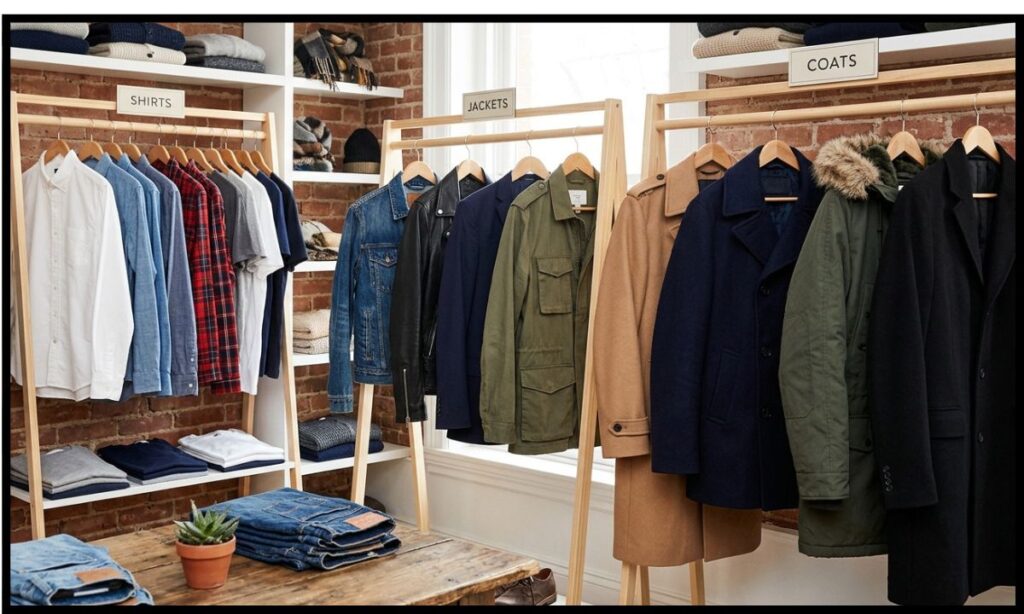
If you’re wondering whether a 29-inch waist automatically determines your shirt or jacket size, unfortunately, no. Shirts and outerwear usually rely on other measurements.
For dress shirts, men’s sizing may use neck and sleeve measurements rather than waist alone. Your Adam’s apple can help you identify approximately where the neck measurement should be taken when measuring around the neck.
For casual shirts, chest measurement is often more important than waist.
With jackets and coats, shoulder width, chest, sleeve length, and sometimes waist shape all influence the final fit.
Someone with a 29-inch waist could therefore wear different sizes across dress shirts, casual shirts, jackets, and coats. Clothing sizing loves keeping things interesting.
Measuring for Pants Correctly
When measuring pants, take your waist measurement first and then your inseam.
The inseam is measured from the crotch area down the inside of the leg to the desired trouser length. Keep the tape straight rather than following the curves of your leg.
For a pants waist measurement, measure around the place where the waistband will actually sit. This matters because high-rise pants may sit closer to your natural waist while low-rise styles sit lower on the body.
Don’t measure around the crotch or use the hip measurement as a substitute for the waist. Each measurement has its own job.
How to Choose the Right Size Online
When you choose clothing size online, begin with a fresh measurement rather than trusting an old number from memory.
Then compare your waist, hips, chest, or bust with the retailer’s chart. If your measurements fall between two sizes, read the product’s fit description and consider the fabric.
For example, stretchy jeans can behave differently from structured trousers. A relaxed garment can also accommodate more variation than a slim-fit garment.
The goal isn’t to find a magical number that works everywhere. The goal is to find the right clothing size for the particular garment you’re buying.
A 29 Waist and Different Types of Clothing
A 29-inch waist can translate differently across various apparel categories.
For pants and jeans, W29 is usually the clearest designation. For women’s clothing, the waist is often combined with hip and bust measurements to determine the most suitable size.
For men’s shirts, neck measurement, chest, and sleeve length are typically more useful. For coats and jackets, shoulder width and chest are especially important.
Here is a quick reminder:
| Clothing Type | Most Important Measurements |
|---|---|
| Jeans | Waist, hips, inseam |
| Pants | Waist, hips, inseam |
| Dresses | Bust, waist, hips |
| Dress shirts | Neck, chest, sleeve length |
| Casual shirts | Chest, shoulders |
| Jackets | Chest, shoulders, sleeve length |
| Coats | Chest, shoulders, sleeve length |
So if someone asks, “I have a 29-inch waist, what size am I?” the honest answer is: it depends on what you’re buying.
Read more : How Do I Know If I Have a Wide Foot?
Frequently Asked Questions
What Does a 29-Inch Waist Mean?
A 29-inch waist means the measurement around your natural waist is approximately 29 inches. It is generally considered a small-to-medium waist size.
What Size Is a 29 Waist in Women’s Clothing?
A 29-inch waist often corresponds to around a US women’s size 8–10, depending on the brand and clothing style.
What Size Is a 29 Waist in Men’s Clothing?
For men, a 29-inch waist is usually labeled W29 in jeans and trousers. The actual fit can vary by brand, rise, and cut.
How Do You Measure a 29-Inch Waist?
Wrap a measuring tape around your natural waist without pulling it too tight. Keep the tape level and record the measurement in inches.
Conclusion
A 29 waist means your waist measurement is approximately 29 inches. In men’s jeans and pants, this usually corresponds directly to size 29 or W29.
In women’s clothing, a 29-inch waist may commonly correspond to roughly US 6–10, but the exact size depends heavily on the brand, garment style, rise, fabric, and hip measurement.
The safest approach is to measure yourself with a measuring tape, then compare your numbers with the specific clothing size chart provided by the manufacturer. That’s especially important for online apparel sizing, where trying something on isn’t possible before purchasing.
Remember, clothing labels are useful guides, not measurements of your worth or your body. A size 29 in one store and a different size in another simply means the brands use different patterns and sizing systems. Nothing more dramatic than that.
If you’re buying jeans, start with your waist and inseam. For dresses, check bust, waist, and hips. For shirts, look at chest, neck, shoulders, and sleeve length. A few accurate measurements can turn the strange little puzzle of clothing sizes into something much easier to solve.
