

Finding the right pair of pants can sometimes feel like solving a tiny mystery. You see “12” on the tag and think, okay, but what does that actually mean in inches? The answer is a little less tidy than most people expect, because Size 12 pants can vary from one brand to another.
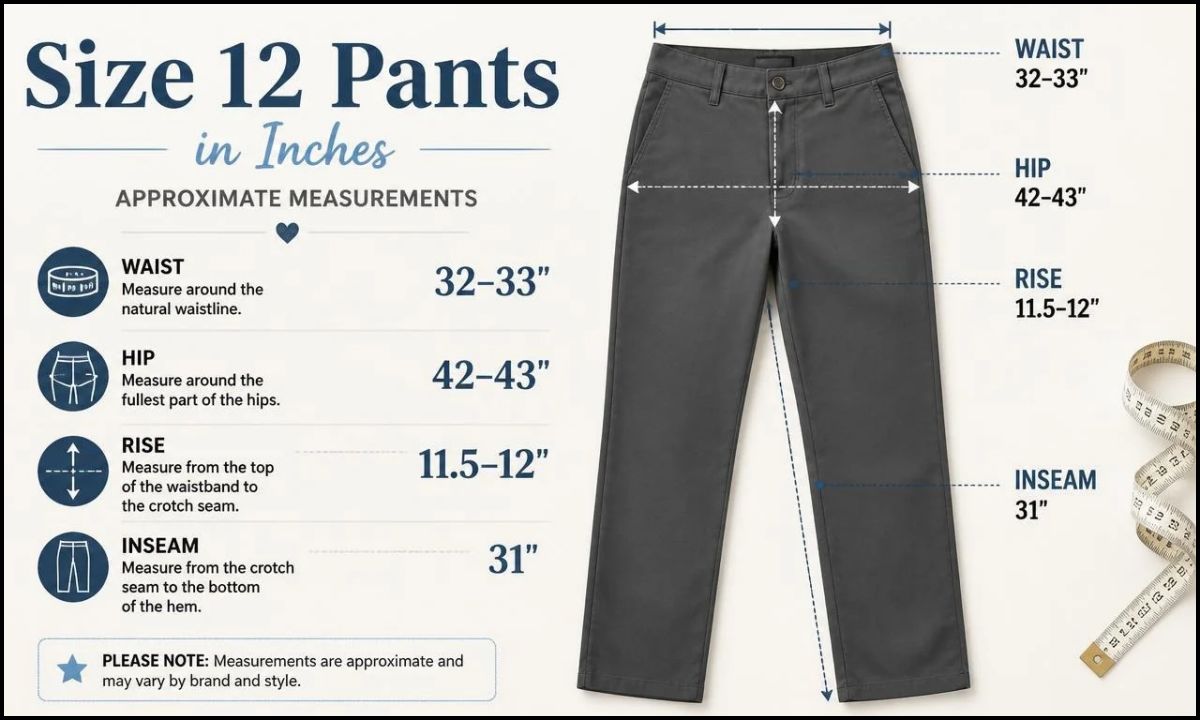
For shoppers looking for size 12 pants in inches, the most useful measurements are usually the waist and hips. A typical women’s US size 12 often falls around 31–33 inches at the waist and 41–43 inches at the hips, but these numbers are only a general guide. Brand, fabric, cut, and sizing system can shift the measurements quite a bit.
That is why knowing your own body measurements is often more helpful than trusting the number printed on a waistband. A measuring tape, a few quiet minutes, and a little patience can save you from ordering three pairs just to discover that one fits and the other two are doing their own thing.
Size 12 Pants in Inches: Quick Measurement Guide

When someone asks, “What size is 12 in pants?” they are usually asking about the approximate waist size and hip size associated with a US women’s size 12.
Here is a general reference for women’s size 12 pants:
| Measurement | Approximate Size 12 Range |
|---|---|
| Waist | 31–33 inches |
| Hips | 41–43 inches |
| Inseam | Varies by style and height |
| US size | 12 |
| Plus-size equivalent | Often 12W, depending on brand |
| Petite equivalent | Often 12P, depending on brand |
These measurements are not universal. One brand may make its size 12 slightly smaller or larger than another brand, which is why checking the manufacturer size chart is always a smart move.
The term USA sizing sounds wonderfully straightforward until you compare two clothing labels from different stores. Suddenly, the numbers have developed personalities of their own.
What Size Is 12 in Pants?
In standard US women’s clothing, a size 12 is generally considered a medium-to-larger regular size, although the exact classification depends on the retailer. In many brands, women’s size 12 pants are designed for a waist somewhere around 31–33 inches and hips around 41–43 inches.
The important thing is that these numbers represent an approximate general size, not a rule written in stone. Brand sizing can differ because manufacturers use different patterns, grading methods, fabrics, and fit models.
A pair of stretchy jeans may comfortably fit a person whose measurements are slightly outside the listed range, while rigid denim can feel snug even when the measurements look almost perfect on paper.
So, when buying size 12 women’s pants, think of the number as a starting point rather than the final answer.
Size 12 Pants Waist in Inches
The size 12 pants waist in inches is commonly around 31–33 inches, although some brands may list a smaller or larger measurement.
If you are trying to determine your size 12 waist measurement, measure around your natural waist without pulling the tape too tightly. Keep the tape level and let it rest against your body rather than squeezing into it.
A useful general guide looks like this:
| US Pants Size | Approx. Waist | Approx. Hip |
|---|---|---|
| 8 | 28–30 in | 38–40 in |
| 10 | 30–32 in | 40–42 in |
| 12 | 31–33 in | 41–43 in |
| 14 | 33–35 in | 43–45 in |
| 16 | 35–37 in | 45–47 in |
This pants size chart in inches is intended as a reference only. Actual measurements can vary between manufacturers, and honestly, clothing tags have never been particularly famous for consistency.
Size 12 Pants Hip Measurement
For many shoppers, the size 12 pants hip measurement matters just as much as the waist.
A general US size 12 may accommodate hips of approximately 41–43 inches. To get your own hip measurement, wrap a measuring tape around the fullest part of your hips and seat. Keep your feet together and make sure the tape stays level.
Your hip circumference can influence whether pants pull across the seat, gap at the waistband, or simply sit comfortably.
For fitted trousers, the hip measurement becomes especially important. For relaxed-leg pants, joggers, or elastic-waist styles, there may be more flexibility.
Women’s Pants Size Chart in Inches
A women’s pants size chart can help you compare different sizes before ordering. The following is a general US reference:
| US Size | Waist | Hips |
|---|---|---|
| 2 | 25–26 in | 35–36 in |
| 4 | 26–27 in | 36–37 in |
| 6 | 27–28 in | 37–38 in |
| 8 | 28–30 in | 38–40 in |
| 10 | 30–32 in | 40–42 in |
| 12 | 31–33 in | 41–43 in |
| 14 | 33–35 in | 43–45 in |
| 16 | 35–37 in | 45–47 in |
These ranges describe women’s regular sizing rather than every available fit category.
If you are shopping for women’s clothing, always compare your measurements with the individual retailer’s clothing size chart where possible.
Regular, Petite, and Plus Size 12 Pants
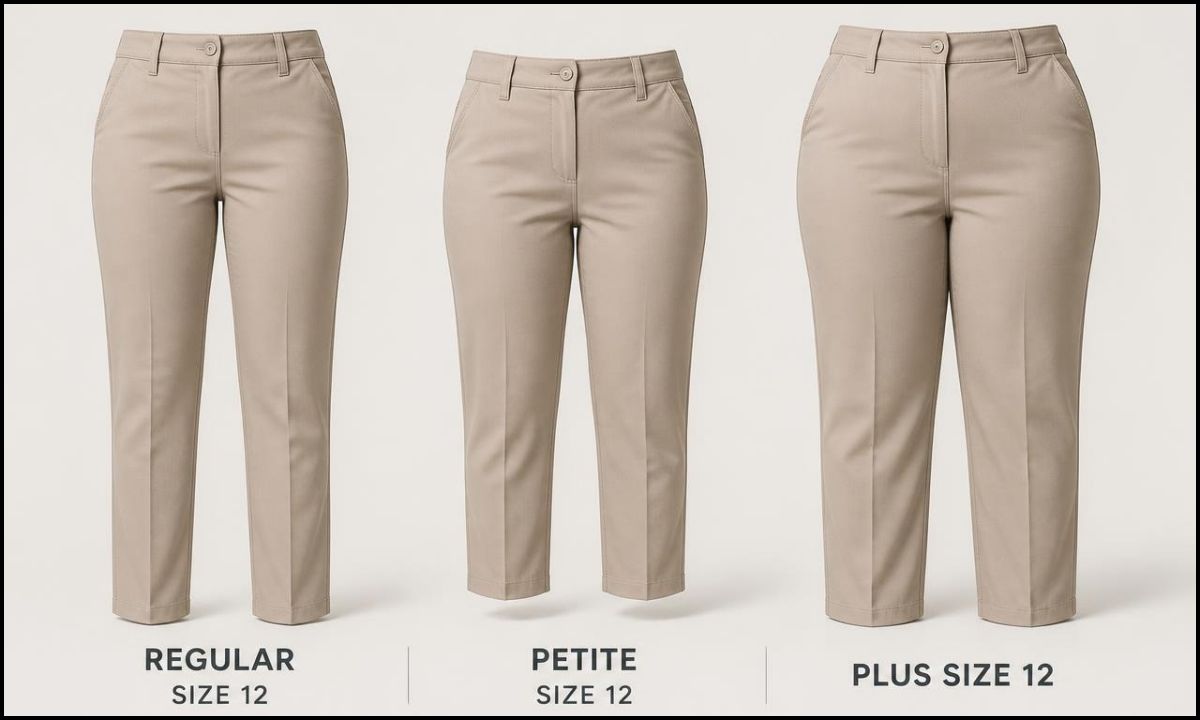
A size 12 does not always look or fit the same across different body proportions. This is where regular, petite, and plus sizing enters the picture.
Women’s regular sizing is generally designed around average height and standard proportions. Women’s petite sizing is usually designed for shorter heights, with adjustments to rise, inseam, and other proportions.
Meanwhile, women’s plus sizing may use different proportions throughout the garment rather than simply making a regular garment larger.
Size 12P Pants
12P usually means a petite version of size 12. The waist and hip measurements may be similar to a regular 12, but the garment proportions can be shorter.
The inseam, rise, knee placement, and overall length may all be adjusted. So if regular size 12 pants are too long but fit properly around your body, 12P pants might solve the problem.
Size 12W Pants
12W generally refers to a women’s plus-size version of size 12. However, the meaning and actual measurements can vary by manufacturer.
A size 12W pants chart should be checked separately because the proportions may differ from standard size 12.
This is one reason standard sizing can be a little misleading. Two garments can carry similar numbers while being shaped quite differently.
How to Measure for Size 12 Pants
You do not need fancy equipment to determine your pants size. A flexible measuring tape is enough, and if you don’t have one, a piece of string can work temporarily before measuring the string with a ruler.
Start with your waist.
Place the tape around the narrowest part of your torso or wherever the pants’ waistband is intended to sit. Keep it comfortably snug without compressing your skin.
Next, measure your hips.
Wrap the tape around the fullest part of your hips and seat. Keep it horizontal all the way around.
Finally, check the inseam if the pants’ length matters.
The inseam is measured from the crotch area down to the bottom of the inside leg. Different styles may use short, regular, or long inseams, so waist and hip measurements alone don’t tell the entire story.
How to Measure Waist for Pants
For an accurate waist measurement, stand naturally and avoid holding your stomach in. Place the tape around the area where the waistband will actually sit.
Don’t yank the tape tight. If you can barely breathe while taking the measurement, the tape is probably making a little too much effort.
Record the measurement in inches, then compare it with the brand’s pants chart.
How to Measure Hips for Pants
For an accurate hip measurement, stand with your feet together and measure around the fullest part of your hips.
Make sure the tape is straight across your back and parallel to the floor.
This measurement is especially useful when choosing fitted trousers, jeans, pencil-leg pants, or other styles where extra room around the hips can make a noticeable difference.
Pants Sizing Can Vary by Brand
One of the biggest reasons shoppers struggle with pants sizing is that clothing manufacturers don’t all follow one identical measurement system.
A size 12 from one company might have a 32-inch waistband, while another could be designed around 33 inches. Both can still be labeled size 12.
The manufacturer size chart is therefore more useful than relying only on a generic measurement chart.
Look for information such as:
- Waist measurement
- Hip measurement
- Inseam
- Rise
- Leg opening
- Garment measurements
- Recommended body measurements
This becomes even more important for online clothing shopping, where you can’t try the pants on before paying for them.
Size 12 Pants and Clothing Fit
Measurements tell you what size might work, but they don’t completely explain clothing fit.
A slim-fit pair of trousers can feel tighter than a relaxed pair with exactly the same labeled size. Stretch denim can also provide more flexibility than stiff cotton or structured fabric.
Here are a few common fits:
- Slim fit: Closer through the hips and legs.
- Straight leg: Similar width through much of the leg.
- Wide leg: More room through the leg.
- Bootcut: Narrower at the knee and wider toward the hem.
- Relaxed fit: Extra room throughout the garment.
- High rise: Waistband sits higher on the torso.
- Mid rise: Waistband sits around the middle of the waist area.
So, if your measurements suggest size 12 but a particular style feels uncomfortable, it doesn’t automatically mean your body measurements are wrong.
Sometimes the pants simply aren’t having a good day.
Size Conversion for Women’s Pants
People shopping internationally may encounter several sizing systems. Size conversion can help, but conversions are approximate because sizing systems don’t match perfectly.
A US women’s size 12 may correspond to a different numerical size in UK, European, or other regional systems.
For that reason, use a women’s size conversion chart as a starting point and then confirm the brand’s measurements.
The same principle applies when converting inches to clothing size. A 32-inch waist doesn’t always translate to exactly one universal clothing size across every country and brand.
XS, S, M, L, XL and Numeric Sizes
Some retailers use letters instead of numbers. You might see XS, S, M, L, XL instead of a numerical pants size.
However, there is no universal conversion between these letter categories and numeric women’s pants sizes.
A size 12 might be labeled L by one manufacturer and XL by another. The garment’s actual waist and hip measurements are more useful than the letter itself.
This is why comparing body measurements is generally more reliable than assuming every “L” or “XL” has identical dimensions.
Pants Measurements vs. Body Measurements

There is an important difference between body measurements and apparel measurements.
Body measurements describe your body. Apparel measurements describe the garment itself.
For example, pants designed for a 32-inch waist might measure slightly more than 32 inches at the waistband because the garment needs to allow movement and comfort.
When shopping, check whether the retailer’s chart provides body measurements or actual clothing measurements. Mixing these two can make an otherwise simple sizing question surprisingly confusing.
Related Women’s Clothing Measurements
Pants are only one part of women’s clothing sizing. Other garments may use completely different measurements.
A clothing chart for tops or jackets may include:
- Chest measurement
- Bust measurement
- Neck measurement
- Sleeve length
- Shoulder width
- Waist
- Hips
For example, women’s casual shirts usually rely more heavily on bust, shoulder, and sleeve measurements than pants do.
Likewise, dress shirt sizing and casual shirt sizing can use different systems.
Men’s clothing size charts, including big and tall sizing, often emphasize chest, neck, sleeve length, and waist. Coats and jackets sizing may also require additional room for layering.
So, a size 12 in women’s pants doesn’t tell you what size shirt or jacket you should buy.
Junior Sizing Is Different
Another common source of confusion is junior sizing.
Junior clothing typically uses a different sizing system and cut from women’s adult clothing. A junior size may therefore not correspond directly to a women’s size 12.
If you’re comparing junior and women’s pants, use the actual waist and hip measurements rather than assuming the numbers are interchangeable.
This is particularly useful when shopping for jeans, casual trousers, or trend-focused styles where junior sizing is common.
How to Choose Size 12 Pants Online
Buying pants online can be easy once you have a repeatable method.
First, take your current waist and hip measurements. Don’t rely on measurements from a pair of pants you bought years ago because bodies and clothing dimensions can both change.
Next, open the retailer’s women’s pants size chart.
Compare your measurements directly with the chart. If your waist suggests size 12 but your hips suggest size 14, look at the brand’s fit recommendations or garment measurements.
Pay attention to fabric too. Stretch materials can fit differently from rigid denim or woven fabrics.
Finally, check customer reviews for information about whether the pants run small, large, short, or long. Reviews are not a substitute for the manufacturer’s chart, but they can provide useful context.
Frequently Asked Questions
Are size 12 pants usually 32 inches at the waist?
A US women’s size 12 is often around 31–33 inches at the waist, so 32 inches can fall within a common range. Exact measurements depend on the brand and style.
What are size 12 pants in inches at the hips?
Many women’s size 12 pants are designed for approximately 41–43 inches at the hips. Always check the specific brand’s measurement chart for a closer match.
Is size 12 the same as 12W?
Not necessarily. 12W generally indicates a women’s plus-size version, and its proportions can differ from standard size 12. Check the retailer’s chart before buying.
What does 12P mean in pants?
12P usually means petite size 12. It is intended for shorter proportions and may have a shorter inseam, rise, and adjusted garment dimensions.
Conclusion
When searching for size 12 pants in inches, a good starting point is a waist of roughly 31–33 inches and hips around 41–43 inches. But those numbers should be treated as a helpful estimate, not an absolute sizing law.
The most dependable approach is to measure your waist and hips with a flexible tape, compare those numbers with the manufacturer size chart, and consider whether you need regular, petite, or plus sizing.
Remember, pants sizing is not perfectly standardized. Fabric, cut, rise, brand, and intended fit can all change how a size 12 feels when you actually put it on.
Once you understand your measurements, shopping becomes much less of a guessing game. And perhaps the best little trick of all is to keep your measurements saved somewhere handy you’ll thank yourself the next time an online checkout page asks, “What’s your size?” and you can answer without staring at the screen like it just asked a philosophical question.
