

Finding Size 19 shoes can feel a little like looking for a book on a shelf where nobody bothered to label the shelves. The size is easy to understand in one sizing system, but once you compare US, UK, and EU measurements, things can get confusing pretty fast.
A Size 19 shoe is an exceptionally large shoe size, and availability is much more limited than for common sizes. Because different brands and manufacturers use different lasts, widths, and sizing methods, simply seeing “19” on a shoe does not always tell you everything you need to know.
A careful look at the Shoe size guide, actual Shoe measurements, and brand-specific information is the safer way to choose.
Whether you are searching for Size 19 men’s shoes, comparing international sizing systems, or trying to order a hard-to-find pair online, this guide explains the important details without making the process feel like a mathematics exam.
What Does Size 19 Shoes Mean?
When people search for Size 19 shoes, they are usually referring to a very large US shoe size, most commonly within the men’s sizing system. It is important to identify the sizing system first, because a US 19 is not automatically the same numerical size as a UK 19 or EU 19.
A US shoe size belongs to the American sizing system, while a UK shoe size follows the British system and an EU shoe size follows the European system. These systems use different scales, so direct numerical comparisons can be misleading.
For someone looking for this size, the first step is therefore simple: check whether the listed 19 means US, UK, or another regional measurement. A product page that just says “19” without explaining the system deserves a second look, honestly.
Size 19 Shoes in the US Sizing System
In American footwear, a men’s US 19 represents an unusually large size and is generally associated with very long feet. Exact dimensions can vary from one manufacturer to another, so a fixed measurement should never be treated as universal.
A useful Shoe sizing guide may show US sizes alongside UK and EU equivalents, plus Inches and Centimeters. Those numbers are helpful for comparison, but they should still be checked against the manufacturer’s own chart before ordering.
For example, a men’s shoe size chart may provide a progression from common sizes to very large sizes, but not every brand produces every size in that progression. This is one reason why shoe sizing differences matter so much when shopping for uncommon sizes.
Size 19 Shoe Conversion: US, UK, and EU
Size 19 shoe conversion can be tricky because there is no single universal conversion formula that works perfectly across every manufacturer. US, UK, and EU systems are based on different sizing conventions.
A typical men’s shoe size chart can help you compare a US size with a corresponding UK or EU value. Still, the safest approach is to treat conversion charts as a reference rather than an absolute rule, since brands can have slightly different fits.
| Sizing system | What to check |
|---|---|
| US | Confirm whether the size is men’s or women’s |
| UK | Use the manufacturer’s UK shoe size conversion |
| EU | Check the brand’s EU shoe size conversion |
| Inches | Compare the listed shoe measurement |
| Centimeters | Compare against the brand’s measurement chart |
When searching for US to UK shoe size or US to EU shoe size, always confirm that the chart is intended for the same gender category. That little detail can save a surprisingly annoying return.
Size 19 Men’s Shoes and Men’s Sizing
Size 19 men’s shoes are generally much harder to find than standard men’s sizes because most stores stock their largest quantities around commonly purchased sizes. Specialty footwear retailers and made-to-order manufacturers may provide more choices.
A detailed Shoe size guide can help shoppers compare a large men’s size with other Men’s shoes, but availability is a separate issue. A size may technically exist in a manufacturer’s sizing system while only a few styles are actually produced in it.
This is especially relevant for athletic shoes, dress shoes, boots, and casual footwear. One manufacturer might offer Size 19 in sneakers but stop at Size 18 in formal footwear, so checking the exact model is necessary.
Shoe Size Measurements: Inches and Centimeters
One of the most useful parts of a Shoe sizing guide is the measurement information. Charts may show shoe size in inches or shoe size in centimeters, giving shoppers another way to compare sizes.
However, there is an important distinction between Foot measurement and Shoe measurement. A shoe needs some internal room beyond the exact length of the foot, so the number printed in a chart should not be interpreted as the exact length of the person’s foot.
For that reason, don’t measure an existing shoe and assume its outside length equals your foot length. Instead, measure foot size directly, preferably while standing, because the foot can spread slightly under body weight. It sounds fussy, but it gives a better starting point.
How to Measure Your Foot for Size 19 Shoes

A reliable foot measurement guide can be more useful than guessing from your previous shoe size. Put a sheet of paper on a flat floor, stand naturally on it, and mark the longest point of your foot.
Measure from the back of the heel to the tip of the longest toe. Repeat the process for both feet, because one foot can be slightly longer than the other. Use the larger measurement when consulting a shoe measurement chart.
The measurement can then be recorded in Centimeters or Inches. Remember that the chart may describe the shoe rather than the actual foot, so don’t expect the two figures to match exactly.
For someone buying an unusually large size, accurate measuring becomes even more useful because there may be fewer nearby sizes available for trial and error. A small mistake in measuring can become a big headache when returning an oversized pair.
Shoe Fit Matters More Than the Number
The number alone doesn’t guarantee proper shoe fit. Two shoes marked with the same size can feel different because their shape, materials, toe box, heel construction, and internal volume may not be identical.
A good shoe fit guide should consider both length and width. Your toes should have enough room to move naturally, your heel should remain reasonably secure, and the shoe should not squeeze the widest part of your foot.
This is particularly important with Size 19 shoes, because finding the right length may already be difficult. It would be frustrating to locate the correct size and then discover the shoe is too narrow.
Shoe Clearance and Comfortable Fit
Good shoe clearance gives your toes enough room without allowing the foot to slide excessively inside the shoe. The exact amount can vary by footwear type, but there should generally be some space beyond the longest toe.
A shoe is not supposed to fit like a glove with every millimeter occupied. A few Millimeters of useful clearance can make walking much more comfortable, particularly when the foot naturally moves forward during activity.
At the same time, excessive clearance can cause the foot to move around, which may lead to rubbing and instability. The goal is balanced shoe fitting, not simply buying the biggest possible size.
Shoe Width: D, E, EE, and EEE
Length is only half of the sizing conversation. Shoe width can dramatically change how a large shoe feels, especially for people with broad feet.
In many men’s footwear systems, Medium width is commonly represented by D width. Wider options can include E width, EE width, and EEE width, although width labels and availability vary by manufacturer.
For example, someone wearing Size 10.0E is dealing with a different fit requirement than someone wearing the same length in a standard medium width. A person who needs E width shoes may find standard shoes too restrictive even when the length is correct.
Similarly, wide width shoes, EE width shoes, and EEE width shoes are designed to provide additional room, but the actual dimensions are not identical across brands. Always consult the manufacturer’s width chart rather than assuming every E or EE has the same physical measurement.
Choosing the Correct Width in Size 19 Shoes
When shopping for Size 19 shoes, width should be checked before placing an order, particularly when buying online. Some large-size footwear is offered in only one width, while specialty manufacturers may provide several options.
A useful shoe width guide can tell you whether the available model comes in medium, wide, or extra-wide versions. If your foot measurement falls between widths, the manufacturer’s recommendation should take priority over a generic chart.
People with broader feet sometimes need men’s wide shoe sizes rather than simply increasing the length. Going up in length just to gain width can leave too much empty space around the toes, which isn’t really a proper solution.
Men’s and Women’s Shoe Sizes Are Different

Men’s and women’s shoe sizes use different sizing scales in the US system, so a numerical size should always be identified by category. A Women’s size 8, for example, does not have the same meaning as a Men’s size 8.
A commonly used rule of thumb is a two size difference between men’s and women’s US sizing, but actual fit can vary by brand and style. That means men’s to women’s shoe size conversion should be treated as an estimate rather than a guarantee.
The same principle applies when comparing examples such as Men’s size 6 with a women’s equivalent. Width conventions can also differ, making a simple numerical conversion incomplete for people who need an exact fit.
Shoe Sizing Differences Between Brands
Even when a size conversion appears correct, Shoe sizing can differ from one manufacturer to another. A company may use a slightly different last, toe shape, or internal construction, resulting in a noticeably different fit.
This is why a shoe size chart should be used together with the brand’s own product information. If a retailer offers a detailed measurement chart, compare your measured foot with that chart before ordering.
The same advice applies to shoe size recommendations found on product pages. Recommendations can be useful, but they should support your measurements rather than replace them.
Finding Size 19 Shoes Online
Online shopping can make unusual sizes easier to locate because specialty retailers may carry sizes that aren’t available in ordinary physical stores. Search specifically for US 19 shoe size, the intended footwear category, and the required width.
When comparing listings, look for the actual shoe measurement chart, not only a dropdown menu containing numbers. A product page that gives length and width information provides much more useful information for unusual sizing.
Before completing shoe ordering, check the retailer’s return policy, because even a carefully selected size can fit differently depending on the shoe’s shape. Return shipping rules are especially worth checking when buying a hard-to-find size.
Why a Size 19 May Not Be Available Everywhere
Large footwear sizes have a smaller market than standard sizes, so retailers often carry fewer variations. This can include fewer colors, styles, widths, and seasonal designs.
A manufacturer might make a particular model in Size 19 but not produce it in every width. Another brand may offer the length but only through special ordering. None of this means the size doesn’t exist; it simply means the selection is narrower.
For shoppers who can’t find the exact combination they need, contacting Help/support can sometimes clarify whether a size is temporarily unavailable, made to order, or discontinued. It takes a minute, and sometimes that minute saves a lot of searching.
Size 19 Shoes and Specialty Manufacturers
Specialty footwear companies can be useful when mainstream retailers don’t carry extended sizes. They may offer larger sizes, additional widths, or custom sizing options that aren’t commonly stocked elsewhere.
Some sizing resources may reference companies or footwear professionals such as Jay Butler when discussing specific shoe sizing or footwear information, but product availability and sizing policies should always be confirmed directly with the relevant manufacturer or retailer.
For a specialty purchase, provide your foot length, foot width, preferred style, and any previous shoe-size information. Giving measurements is much more useful than simply saying, “I usually wear 19,” because previous sizing can differ between brands.
How Shoes Should Fit
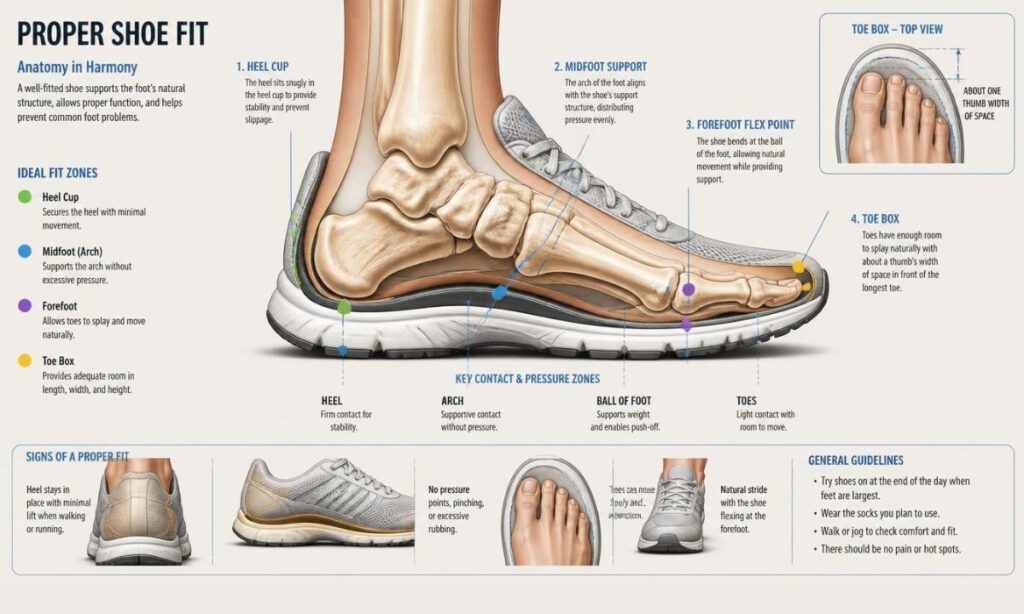
Knowing how shoes should fit makes the final selection much easier. The heel should feel secure without painful pressure, the midfoot should feel supported rather than squeezed, and the toes should have enough room to move.
Your longest toe shouldn’t be pressed against the front of the shoe. At the same time, your foot shouldn’t slide dramatically from front to back while walking.
A good comfortable shoe fit should feel secure when standing and walking, not only when sitting down in a store. Feet can also swell somewhat during the day, so checking fit later in the day can be useful.
Half Size Up: When Does It Make Sense?
Choosing a half size up is sometimes suggested when a shoe feels slightly short, but increasing length isn’t always the correct answer. If the real problem is width, moving up in length can create unnecessary space at the front.
For instance, someone moving from Size 10.0E to Size 10.5 may gain some additional room, but the change also increases length. A wider shoe in the correct length may provide a better fit.
This is why proper shoe sizing considers length, width, shape, and intended use together. There isn’t one adjustment that works for every uncomfortable shoe.
Shoe Size Selection for Everyday Comfort
Good shoe selection begins with measurements and ends with practical use. A running shoe, work boot, dress shoe, and casual sneaker may all fit somewhat differently even when they share the same nominal size.
Think about how the shoe will actually be used. Someone spending hours standing may need a different amount of room and cushioning than someone wearing the shoes occasionally for formal events.
For Size 19 shoes, the selection process can take a little more patience because fewer models may be available. It is better to spend time finding the right construction and width than to settle for a shoe that causes discomfort simply because it comes in the right number.
A Simple Size 19 Shoe Reference
The following checklist can work as a quick shoe size reference when shopping:
| What to check | Why it matters |
|---|---|
| US/UK/EU system | Prevents incorrect conversion |
| Foot length | Establishes the basic size |
| Foot width | Helps determine medium or wide sizing |
| Brand chart | Accounts for sizing differences |
| Toe clearance | Supports comfortable movement |
| Return policy | Provides protection if fit is wrong |
This simple approach is much more dependable than relying on the number printed inside an old pair. Old shoes can stretch, wear down, or have completely different sizing conventions anyway.
Common Mistakes When Buying Size 19 Shoes
One common mistake is assuming every “19” means the same thing. Always identify whether the listing uses the US, UK, or EU system before comparing it with your existing footwear.
Another mistake is confusing Shoe measurement with Foot measurement. The shoe needs room for the foot, so the dimensions shouldn’t necessarily match one-for-one.
Some shoppers also overlook width. A person may spend hours searching for the correct length while ignoring whether the available shoe is D width, E width, EE width, or EEE width.
Finally, don’t assume an online conversion chart is more accurate than the manufacturer’s own information. A general Shoe sizing guide is useful for orientation, while the brand’s chart should normally be the final reference.
Size 19 Shoes: A Practical Buying Checklist
Before purchasing, take a moment to check the following:
- Confirm that “19” refers to the correct sizing system.
- Measure both feet while standing naturally.
- Record the larger Foot measurement.
- Compare the measurement in Inches or Centimeters.
- Check the manufacturer’s shoe size chart.
- Review available Shoe width options.
- Confirm whether the model is medium, wide, or extra-wide.
- Check the retailer’s return and exchange policy.
- Read model-specific fit notes when available.
- Contact Help/support if the sizing information is unclear.
It may seem like a lot of checking for one pair of shoes, but uncommon sizes give you fewer opportunities to simply try another pair. A little preparation is worth it.
Read more : What’s the Average Shoe Size for a Man?
Frequently Asked Questions
What Are Size 19 Shoes?
Size 19 shoes are an exceptionally large footwear size, typically referring to the US men’s sizing system. Always confirm the sizing system before buying.
Size 19 Shoes in US, UK, and EU Sizes
Use a reliable conversion chart to compare US, UK, and EU sizing, as measurements can vary slightly between brands and manufacturers.
How to Measure for Size 19 Shoes
Measure both feet from heel to longest toe and record the length in inches or centimeters before comparing it with the brand’s shoe size chart.
How Should Size 19 Shoes Fit?
A proper fit should provide enough toe clearance, secure heel support, and sufficient width without squeezing or allowing your foot to slide around.
Conclusion
Finding Size 19 shoes is certainly more challenging than shopping for common sizes, but the process becomes much clearer when you stop treating the number as the whole story. US, UK, and EU systems differ, while length, width, construction, and brand-specific measurements all affect the final fit.
Use a reliable Shoe size guide, measure your feet carefully, compare the manufacturer’s chart, and pay attention to width and clearance. A correct shoe size conversion is only the starting point; the real goal is a secure, comfortable, and properly shaped shoe.
Most importantly, don’t choose a pair simply because “19” appears on the box. Check the measurements, check the width, check how the shoe is designed to fit, and check the return policy before ordering. Finding a hard-to-source size may take a little extra effort, but the right pair should make walking feel ordinary again which, really, is exactly what good footwear ought to do.
